Welcome to the NVC Library

  • See the vast materials available from world-renowned CNVC Certified Trainers
  • Browse by topic, by trainer, by phrase, and more
  • Explore a variety of video, audio, and written resources
  • See the newest resources and all the learning tools available
  • View all that awaits you when you become a subscriber!
NVC Library
  • OTT Migration ID: rm_Parenting_with_Purpose
  • OTT Content Type: Video
  • OTT Categories: NVC and Parenting
  • Subtitle: Navigating Challenges to Shape Future Outcomes
  • Time Investment: 2 minutes
  • Date Added: 03/13/2024
  • Intro Text:

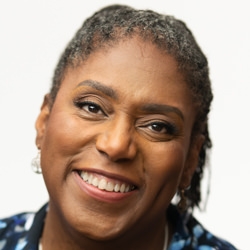
    Roxy Manning discusses the connection between the challenges parents face with their children and the qualities they want them to develop. She highlights the importance of aligning actions with desired outcomes, using the example that if parents value independence, they should encourage choice rather than demanding compliance. She encourages parents to consider the long-term impact of their parenting choices on shaping their children's future behavior.

  • Payee: Roxy Manning
  • Points: 1

Roxy Manning discusses the connection between the challenges parents face with their children and the qualities they want them to develop. She highlights the importance of aligning actions with desired outcomes, using the example that if parents value independence, they should encourage choice rather than demanding compliance. She encourages parents to consider the long-term impact of their parenting choices on shaping their children's future behavior.

Keywords:
  • Roxanne Manning
  • Roxy Manning
  • NVC parenting
  • independence
  • align
  • childhood
  • choice
  • Time Investment: 7 - 10 minutes
  • Date Added: 3/11/2024
  • Intro Text:

    So many of us have a habitual response of trying to eliminate uncertainty and the arrival of what we don't want. Alternatively, we can embrace the irreducible uncertainty of life. This shift from resistance and helplessness to mourning allows acceptance of outcomes, reduction of stress, and opens the door to noticing and appreciating what's present and available amidst challenges.

  • Payee: NGL
  • Points: 1
  • Skill Level: All Skill Levels

I know I am done working my way through something when I get to a place of feeling grateful for it. That’s when I know that I have assimilated the events, and am open to life again. Sometimes it takes years (some things I may not finish while alive, I am quite sure of that), and sometimes it takes only moments. This morning I went from acute helplessness to gratitude in less than an hour, and I want to share what I learned in the process.

The Context

I had a conference call scheduled with members of a community I created – the Consciousness Transformation Community. Several things combined to result in my not being present at the beginning of the call, and a number of people calling in and not getting through. In the end, 10 minutes late, I came back from the errand I was going to run, the technical problem was fixed, and the call materialized. By then most people had given up, and only 5 people participated. It soon became clear that while I had taken the steps to ask for the technical support with the call, the people who were going to offer the support that would have prevented this from happening didn’t do it.

The Habit

I am sure this kind of dilemma is familiar to many. We each have our own peculiar ways of responding in such moments. My own habitual response became clearer to me than before this call. Simply put, I have been putting attention and energy, mind and heart, on understanding how the unwelcome result happened, and what can be learned to prevent it in the future. This kind of focus is one of the deepest sources of stress for me: always working on eliminating possibilities for error, forgetfulness, or inattention. It’s as if I have been trying to make something go away that cannot: the irreducible uncertainty of life and human interaction. I don’t think I am alone in this. In fact, I imagine us all to have a collective illusion about our limitations. If only everyone paid attention fully, if only everyone took responsibility, if only … then there would be no unwelcome outcomes. From here it becomes so easy to blame – others or ourselves as the case may be.

The Alternative

With the help of others on the call, I found an alternative to my habitual response. I saw that I could open up for real, not just in concept, to the irreducible uncertainty of life. There is never going to be anything definitive that I or anyone else can learn, integrate, or put in place that would take away this uncertainty. The very attempt to do so feeds my sense of helplessness and creates the stress. I am only beginning to imagine what life could be like. Instead of helplessness, I can see simply mourning what happened, being with the sadness of the results and their effect on me and others. In this case, I am still feeling waves of it in relation to all the people who were looking forward to the call and couldn’t get on it.

The difference between the two emotional states is immense. Helplessness is full of tension and contraction, and is about moving away from life and what is happening. There is no peace in it. Mourning, even when intensely painful, flows with life. My heart opens, and I know and accept the consequences. The shift from helplessness to mourning is not about having no pain; it’s about how I relate to life. Am I opening to acceptance, or am I in some fundamental way fighting life?

Opening to What Is

Then, and only then, can I notice what is happening instead of being entirely with what didn’t happen or what should happen or what I can do to make it never happen again. One of the people on the call brought to my attention that I said, several times, that the call wasn’t happening, when, in fact, we were on the call, connecting, learning together, and even having fun and laughing. I found my way to gratitude. I could see that this depth of learning, in community, with support, came about precisely because this mishap happened and I was in acute helplessness at a time I could receive support. Whenever something doesn’t happen, something else does. Life continues, and we have only so much say about what it will look like. I can fight life, or I can join the ride, with the mourning and the laughter, the pain and the joy.

 
Keywords:
  • mourning
  • uncertainty
  • acceptance
  • blame
  • limitation
  • helplessness
  • should
  • control
  • reactivity
  • gratitude
  • Miki Kashtan
  • OTT Migration ID: ih_ks_Working_Together_for_Change_5_Sessions
  • OTT Content Type: Playlist
  • OTT Categories: Deep Dive Courses (multiple session courses), NVC and Social Change
  • Subtitle: 5 Session Course
  • Time Investment: 4 hours
  • Date Added: 03/10/2024
  • Intro Text: Challenge racism with compassion and clarity, gain tools to foster reflection and systemic change.
  • Payee: Itzel Hayward, Kathy Simon
  • Points: 0

This course is designed to help you step into your power and create a more just world while staying aligned with compassion and empathy.

Using practices and insights based in Nonviolent Communication, this five-session series explores how to challenge racist words and ideas in ways that are most likely to encourage others to openly reflect on their beliefs and behavior. This is an important step in making real change. 

You will come away with an increased ability to:

  • Stay grounded in conversations that can be painful and upsetting
  • Respond meaningfully to perspectives that are different from your own
  • Find words to express clearly and passionately why it matters to transform social systems
Keywords:
  • Itzel Hayward
  • Kathy Simon
  • social change
  • racism
  • compassion
  • empathy
  • honest expression
  • empowerment
  • ally
  • white fragility
  • privilege
  • role play
  • resolve conflict
  • requests
  • marginalized group
  • BIPOC
  • people of color
  • multi session course
  • OTT Migration ID: mm_Embracing_Positivity
  • OTT Content Type: Video
  • OTT Categories: Beyond NVC Basics, NVC in our Inner Experience
  • Subtitle: Transform Life through Joyful Choices and Conscious Action
  • Time Investment: 7 min 30 sec
  • Date Added: 03/08/2024
  • Intro Text:

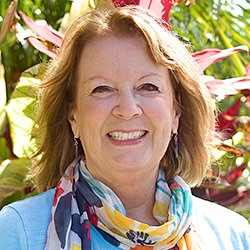
    Marshall Rosenberg used to talk about every situation with the same level of joy a child might feel. This may seem impossible at first! But when you focus on all the ways something is hard, you miss out on the full experience and remove your sense of choice. In this video, Mary shares several benefits of positivity and lots of examples along the way. 
  • Payee: Mary Mackenzie
  • Points: 1

Marshall Rosenberg used to talk about every situation with the same level of joy a child might feel. This may seem impossible at first! But when you focus on all the ways something is hard, you miss out on the full experience and remove your sense of choice. In this video, Mary shares several benefits of positivity and lots of examples along the way. 

Keywords:
  • Mary Mackenzie
  • Positivity
  • Marshall Rosenberg
  • choice
  • Time Investment: 1 - 2 minutes
  • Date Added: 3/6/2024
  • Intro Text:

    Trainer Tip: When in a conflict that doesn’t seem to have a solution being aware of your needs, and then being creative and flexible about getting them met, can go a long way to coming up with creative solutions that work for everyone.

  • Date Created: 2005
  • Payee: Mary Mackenzie
  • Points: 1
  • Skill Level: Beginner Skill level

Trainer Tip


By perseverance the snail reached the ark.

—Charles Haddon Spurgeon

Do you ever find yourself in an argument that doesn’t seem to have a solution? Consider this couple’s situation. The husband picks up after himself and he likes a neat home; the wife tends to put things down and leave them there. Their arguments usually involve the husband accusing the wife of being lazy and uncaring, and the wife accusing the husband of being rigid.

The only two strategies that they can come up with are either the husband picks up for both of them or the wife tries to pick up for herself. But she usually doesn’t stick with it for long and the argument starts over. Sometimes people get stuck in this kind of argument for years. How about a different approach?

Let’s consider the needs. The husband may need orderliness and cooperation, while the wife may need spontaneity and autonomy. Suppose he says to her, “You know, when I come home and see your clothes on the floor from the living room to the bedroom, I feel confused and annoyed because yesterday I heard you say that you would start picking up your things. Did I hear you correctly yesterday?”

“Well, yeah, but you know I came home and jumped in the shower. I meant to pick up the clothes, but then I started reading the paper and just forgot.” “So, your intention was to pick up your clothes, but then you got distracted?” “Yeah. That’s it.” “You know, when I hear that I feel annoyed because I’d really like to trust that you’ll follow through on your commitments. Do you think you heard my request to pick up your things as a demand?”

“Of course it’s a demand. If I don’t do it your way, I’m in trouble.” “I can see how you’d think that because I have been really upset about this issue for a long time. But I’d like you to hear it differently now. I really do value orderliness, but I also value your need for autonomy and spontaneity. I’d truly like for us to create a solution that meets both of our needs. Would you be willing to brainstorm ideas with me that might accomplish that?”

Can you imagine new solutions to this ongoing conflict? It’s especially difficult to be creative when you are emotionally charged by the situation. Here are a few ideas: She pays someone to clean the house weekly; they put a box by the front door for all the clothes she takes off; she has one room in the house designated hers where she can be as untidy as she likes; he has one room that’s his and keeps it as tidy as he likes; or he continues to tidy the house for both of them and she adds other duties to her list, such as the laundry or yard work. The point is that there are numerous ways to meet these needs. The trick is to be creative and flexible in choosing strategies.

Be aware of your needs today and be creative and flexible about getting them met.

This trainer tip is an excerpt from Mary Mackenzie's book, Peaceful Living, available from PuddleDancer Press.

 
Keywords:
  • persistence
  • conflict
  • household
  • cleaning
  • problem solving
  • Mary Mackenzie
  • Time Investment: 6 - 9 minutes
  • Date Added: 03/06/2024
  • Intro Text:

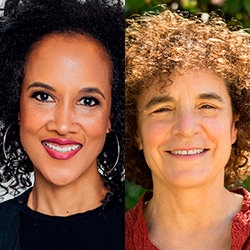
    Differentiation means you can access both autonomy and intimacy in relationships. When you're unafraid to lose yourself or be controlled, you can feel deeply connected and affected, while standing strong in yourself. Differentiation also means ability to tolerate disharmony and differences, self-soothe, offer compassion, and set boundaries. Here, we'll focus on setting boundaries with monitoring eye contact and physical interaction, and interrupt our "helping".
  • Date Created: 2024
  • Payee: LaShelle Lowe-Charde
  • Points: 2
  • Skill Level: All Skill Levels

Differentiation means you can access both autonomy and intimacy in relationships. When you're unafraid to lose yourself or be controlled, you can feel deeply connected and affected, while standing strong in yourself. Differentiation also means ability to tolerate disharmony and differences, self-soothe, offer compassion, and set boundaries. Here, we'll focus on setting boundaries with monitoring eye contact and physical interaction, and interrupt our "helping".

 
Keywords:
  • boundaries
  • differentiation
  • helping
  • eye contact
  • body language
  • LaShelle Lowe-Charde
  • Elia Lowe Charde
  • OTT Migration ID: ih_ks_Create_Space_to_Support_Change
  • OTT Content Type: Video
  • OTT Categories: NVC and Social Change
  • Time Investment: 3 min 20 sec
  • Date Added: 03/03/2024
  • Intro Text:

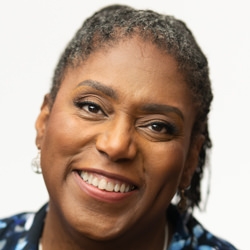
    What is empowered speech and how does it link to interdependence? How do you speak in a way that increases the chances of being heard and creates space where individuals are more inclined to listen and act? In this excerpt from the 2021 course, Working Together for Change, Itzel and Kathy explore how to do this by integrating empowered speech, attuned speech, and a commitment to maintaining connections.
  • Date Created: 2021
  • Payee: Itzel Hayward, Kathy Simon
  • Points: 1

What is empowered speech and how does it link to interdependence? How do you speak in a way that increases the chances of being heard and creates space where individuals are more inclined to listen and act? In this excerpt from the 2021 course, Working Together for Change, Itzel and Kathy explore how to do this by integrating empowered speech, attuned speech, and a commitment to maintaining connections.

Keywords:
  • Kathy Simon
  • Itzel Hayward
  • social change
  • attune
  • empowerment
  • connection
  • Time Investment: 5 - 7 minutes
  • Date Added: 03/01/2024
  • Intro Text:

    In a workshop, a hesitant white neurodivergent man faced a triggering reaction from a Global Majority transgender man. Uncovering their backgrounds, the facilitator addressed family dynamics and exclusion. A repair exercise fostered empathy, challenging assumptions and emphasizing the importance of equitable facilitation for a richer group experience.

  • Payee: Roxy Manning
  • Points: 1
  • Skill Level: All Skill Levels

Near the end of a two-day workshop I facilitated, a white man who had not spoken within the group yet shared that he often finds it difficult to speak up in group settings.

A transgender man from the Global Majority* - who had spoken up frequently over the two days - reacted with pronounced irritation. In that moment, the Global Majority man heard the messages from his past being reinforced. “You’re too loud!” “You speak too much!”

In response, the white man shrank back into his seat, his head bent low, eyes fixed on the floor.

Had I, as the facilitator, approached this exchange as a seemingly common challenge of sharing airtime in racially diverse group settings, I would have missed an important opportunity. Using facilitation practices to slow down and discover what was underneath each person’s expression invited in a compassionate stance that nurtured a deeper connection among both participants and the group as a whole.

In the Global Majority man’s family, children were taught to be quiet and not take up space — and they usually carried those notions through into adulthood. And, from the reactions he got in different situations as a transgender man - “you’re too flamboyant!” - he internalized that trans people rarely find belonging in groups.

The white man was neurodivergent, extremely introverted, and had mental health challenges including severe anxiety. Over the course of his life, he’d heard the message that his voice was not wanted. And he believed he didn’t have much of value to contribute. It had taken enormous courage for him to speak up.

I facilitated the group through a repair exercise which started by separating the group into two to offer empathy to the two individuals involved. I then brought the group back together and facilitated a dialogue between the two individuals. This offered healing for the whole group, as well as the two individuals involved in the triggering exchange.

The Global Majority man had felt pain in how he heard the white man’s message — he needed to be heard and receive empathy for his past experiences of being told he spoke too much. Each time he contributed to conversations in this group, he was courageously stepping into new territory where he shared his voice. His expression of pain and the discussion that followed invited us to challenge our unconscious assumptions about the quantity of his sharings. Unchallenged, these assumptions might prevent us from appreciating the ways in which his authenticity and contributions helped to create the inclusive and welcoming space we desired.

When the white man had spoken up, he had wanted to ask how NVC could be adapted for neurodivergent people like him, who struggle to name emotions and couldn’t offer empathy in the conventional NVC way. What a great question! And one we would have missed if we hadn’t gone through a healing process to enable him to speak up.

When we facilitate groups, we rarely know the backgrounds of the people in the room. Equitable Facilitation strives to help everyone come away having had the opportunity to be heard and to trust that their contributions are welcome and valued. When we ensure the voices from all backgrounds are included, the richness of the experience for all can be amplified.


* The term Global Majority, coined by Rosemary Campbell-Stephens, includes people who identify as Black, African, Asian, Brown, Arab, and mixed heritage, are indigenous to the Americas and the global south, and/or have been racialized as ‘ethnic minorities’.

 
Keywords:
  • equity
  • facilitation
  • group
  • marginalization
  • intersectionality
  • inclusion
  • bias
  • repair
  • conflict
  • inequality
  • Roxy Manning
  • Time Investment: 3 - 5 minutes
  • Date Added: 2/26/2024
  • Intro Text:

    An anchor is something you turn your attention toward in order to interrupt reactivity and access a non-reactive, expansive perspective. Though it doesn't make the reactivity go away, it allow you the internal space to choose to not behave from reactivity. In this practice exercise learn more about anchors, plus how to create and use them.

  • Date Created: 2024
  • Payee: LaShelle Lowe-Charde
  • Points: 2
  • Skill Level: All Skill Levels

An anchor is something you turn your attention toward in order to interrupt reactivity and access a non-reactive, expansive perspective. Though it doesn't make the reactivity go away, it allow you the internal space to choose to not behave from reactivity. In this practice exercise learn more about anchors, plus how to create and use them.

 
Keywords:
  • anchor
  • self regulation
  • emotional safety
  • reactivity
  • LaShelle Lowe-Charde
  • Elia Lowe Charde
  • OTT Migration ID: ac_empowering_kids_under_domination
  • OTT Content Type: Video
  • OTT Categories: NVC and Parenting, NVC and Families
  • Time Investment: 5 minutes
  • Date Added: 02/23/24
  • Intro Text:

    Discussion into the difficult topic of parenting, childhood trauma, and social status.

  • Payee: Aya Caspi
  • Points: 1

Join Aya Caspi as she delves into the difficult topic of parenting, childhood trauma, and social status. She discusses the generational impact of being labeled by society as "less than" or subservient. The wounds of childhood trauma can be healed so they no longer are a means of control by a dominant culture.

Childhood trauma has a significant impact on a person. Often a person feels inferior and accepts the role of being second class or not good enough. This is embraced by dominant culture as a means of controlling people and manipulating them into believing they can never break free of the pain and find inner peace and equality.

She discusses how collective trauma is a result of the oppressed and oppressor dynamic that exists. This construct is not designed to support our human needs. The reward and punishment system that prevails within society results in a sense of obligation, shame, and guilt.

Keywords:
  • Aya Caspi
  • NVC
  • authority
  • being heard
  • children
  • communication
  • collaboration
  • conflict resolution
  • dominant culture
  • empathy
  • energy of the need
  • needs
  • family
  • parenting
  • trauma
  • Live Course Recordings
  • Time Investment: 11 - 16 minutes
  • Date Added: 2/21/2024
  • Intro Text:

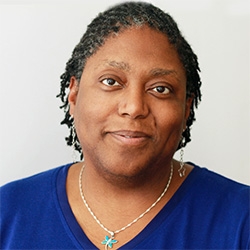
    Read here about patriarchy as a system, its impact on men and women, how its rooted in separation and control, leading to dominance and submission. Under patriarchy, even men are brutalized. Instead, we can embrace nonviolence to challenge patriarchy and its offspring (eg. capitalism, child trafficking, etc). And to make a lifelong commitment to undo socialization, act within our influence, and work towards liberation of all.
  • Payee: NGL
  • Points: 4
  • Skill Level: All Skill Levels

Here we discuss patriarchy as a system and its impact on men and women, how its rooted in separation and control, leading to dominance and submission. Under patriarchy, even men are brutalized to prepare for positions of dominance. Instead, we can embrace nonviolence to challenge patriarchy and its offspring (eg. capitalism, white supremacy, child trafficking, etc). The invitation is to undertake a lifelong commitment to undo socialization, act within our sphere of influence, and work towards the liberation of all.

 
Keywords:
  • patriarchy
  • system
  • nonviolence
  • oppression
  • socialization
  • Miki Kashtan
  • OTT Content Type: Video
  • OTT Categories: Beyond NVC Basics
  • Time Investment: 11 minutes
  • Date Added: 2/17/2024
  • Intro Text:

    Roxy Manning discusses the need to expand our understanding of observations within Nonviolent Communication (NVC). She challenges the idea of objective observation, noting its limitations, and introduces internal observations, citing personal experiences to illustrate their influence on emotions and self-perception. Additionally, she emphasizes systemic awareness as a crucial aspect of observation, highlighting its importance in understanding broader societal issues. Overall, Roxy advocates for a comprehensive approach to observations in NVC, incorporating external, internal, and systemic perspectives to foster inclusivity and empathy.

  • Payee: Roxy Manning
  • Points: 1
  • Skill Level: Beginner Skill Level
  • Audio:

Roxy Manning discusses the need to expand our understanding of observations within Nonviolent Communication (NVC). She challenges the idea of objective observation, noting its limitations, and introduces internal observations, citing personal experiences to illustrate their influence on emotions and self-perception. Additionally, she emphasizes systemic awareness as a crucial aspect of observation, highlighting its importance in understanding broader societal issues. Overall, Roxy advocates for a comprehensive approach to observations in NVC, incorporating external, internal, and systemic perspectives to foster inclusivity and empathy.

Keywords:

  • Roxy Manning
  • internal observations
  • observation
  • cultural narrative
  • social change
  • Time Investment: 8 - 12 minutes
  • Date Added: 02/16/2024
  • Intro Text:

    Even groups and organizations with noblest visions can slide into cult-like swamps. The reasons that bring people together are irrelevant; whether it's politics, spirituality, activism, art… a hidden hierarchy, plus dominance and submission dynamic can sprout, and beliefs that “we, our leader, and our path is better than others, we have all the answers”. As a member it can be hard to see. Here are signs of cult mentality and ways to assess.

  • Date Created: 2024
  • Payee: Robert Maoz Krzisnik
  • Points: 3
  • Skill Level: All Skill Levels

Even groups and organizations with noblest visions can slide into cult-like swamps. The reasons that bring people together are irrelevant; whether it's politics, spirituality, activism, art… a hidden hierarchy, plus dominance and submission dynamic can sprout, and beliefs that “we, our leader, and our path is better than others, we have all the answers”. As a member it can be hard to see. Here are signs of cult mentality and ways to assess.

 
Keywords:
  • cult
  • group
  • organization
  • obedience
  • culture
  • power
  • privilege
  • dominance
  • submission
  • Robert Krzisnik
  • OTT Migration ID: rg_Embracing_Impermanence
  • OTT Content Type: Video
  • OTT Categories: NVC in our Inner Experience
  • Subtitle: Finding Comfort in Life's Moments
  • Time Investment: 1 min 45 sec
  • Date Added: 2/13/2024
  • Intro Text:

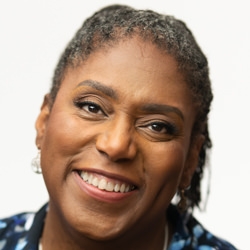
    Robert Gonzales shares how embracing impermanence involves continually growing in his ability to accept unmet needs, to be comfortable with discomfort and unwanted experiences. Robert shares a quote by Henry Wadsworth Longfellow about letting it rain, emphasizing the simplicity and wisdom in accepting life's experiences as they come.
  • Payee: Ruth Joy
  • Points: 1

Robert Gonzales shares how embracing impermanence involves continually growing in his ability to accept unmet needs, to be comfortable with discomfort and unwanted experiences. Robert shares a quote by Henry Wadsworth Longfellow about letting it rain, emphasizing the simplicity and wisdom in accepting life's experiences as they come.

Keywords:
  • Robert Gonzales
  • impermanence
  • embracing impermanence
  • unmet needs
  • needs
  • Time Investment: 4 - 5 minutes
  • Date Added: 02/11/2024
  • Intro Text:

    When a person of color (A.K.A. a person from the Global Majority, or GM) tells a marginalization story that triggers a defensive response from a white participant in a group, to foster awareness and healing, leaders can address the white person's distress with empathy, highlighting the common dynamic of prioritizing white pain. From there, leaders can offer GM participants opportunity to share their experience and make requests of the group.

  • Payee: Roxy Manning
  • Points: 1
  • Skill Level: Beginner Skill Level

For over 10 years I ran a retreat to bring together members of the Global Majority* and white people. The intention was to help people from both groups learn ways they could show up and come together to combat racism.

In one session, my co-trainer - a Latino man - shared a story about his experience of the police when he was a teenager. He and his brother had been stopped while driving home. The police took his brother out of the car and beat him up – they didn’t like the way he’d questioned them about the reason for the stop.

A white woman in the group spoke up, “That’s not how the police are!” The story my colleague shared was not in line with her experience.

When another person from the Global Majority spoke up with anger about this white woman’s invalidation of the Latino man’s experience - the white woman burst into tears. Almost all of the white folks in the room gathered around her to try and help her feel better — further removing the focus from my colleague’s experience and the very real pain the other Global Majority participant was trying to express.

I faced a number of facilitation challenges at that moment. I don’t recall if I knew what to do then, but this is one approach I would take now.

First, I would briefly acknowledge the white woman. I would gain clarity on what was under her distress - perhaps she was shocked to realize she’d just done something that wasn’t in line with her values around race and equality.

Through reflecting back her unmet needs behind her distress, I would let her know I still saw her humanity while inviting her and other participants into awareness of a common dynamic in interracial interactions.

The pain of white people is often given precedence over the pain of people from the Global Majority.

I would ask the white woman and all the people who were supporting her to practice self-empathy, reconnect to their intention to disrupt these patterns and ensure that the people from the Global Majority were getting the support they needed.

Then, I’d check with both my co-facilitator and the person from the Global Majority who spoke out — offering them the opportunity to share more about their experience and make any requests of the group. This would bring the focus back to supporting healing and raising awareness about these challenging interpersonal interactions.

This is just one of a number of approaches I might now take as a facilitator in a similar situation. A facilitator is often faced with potentially challenging situations — they need a toolkit to support them. I’ve learned these skills over the past 20 years. And I’m thankful to have the opportunity to share them with you.


*The term Global Majority, coined by Rosemary Campbell-Stephens, includes people who identify as Black, African, Asian, Brown, Arab, and mixed heritage, are indigenous to the Americas and the global south, and/or have been racialized as ‘ethnic minorities’.

 
Keywords:
  • BIPOC
  • Global Majority
  • remarginalization
  • facilitation
  • group
  • leadership
  • equity
  • race
  • Interracial
  • empathy
  • white pain
  • oppression
  • privilege
  • conflict
  • Roxy Manning
  • OTT Migration ID: mk_Reducing_the_Gap_Capacity
  • OTT Content Type: Video
  • OTT Categories: NVC in our Inner Experience, NVC and Social Change
  • Time Investment: 2:35 minutes
  • Date Added: 2/8/2024
  • Intro Text:

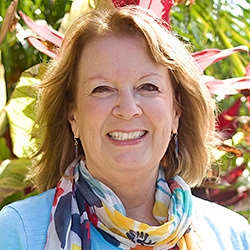
    Each of us has a range of capacities. Miki Kashtan describes this as a range from "floor to ceiling." Floor capacity is what happens when you hit your limitation, ceiling capacity is when you are closest to functioning in line with your values and vision. This video describes the need to work on both to prevent the gap from expanding.
  • Payee: NGL
  • Points: 1

Each of us has a range of capacities. Miki Kashtan describes this as a range from "floor to ceiling." Floor capacity is what happens when you hit your limitation, ceiling capacity is when you are closest to functioning in line with your values and vision. This video describes the need to work on both to prevent the gap from expanding.

Keywords:
  • Miki Kashtan
  • capacity
  • vision
  • values
  • limits
  • Time Investment: 2 - 3 minutes
  • Date Added: 02/06/2024
  • Intro Text:

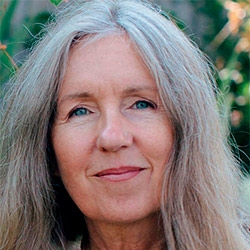
    Trainer Tip: When we express frustration without blaming others and by clarifying our own needs and requests, we diminish the possibility of hurt feelings and separation in our relationships. So next time you feel very agitated or angry, rather than implying the other person is wrong or at fault, try the following: own your feelings, make a specific request, and rather than implying they need to give up their needs focus on your needs.
  • Date Created: 2005
  • Payee: Mary Mackenzie
  • Points: 1
  • Skill Level: Beginner Skill level

Trainer Tip


Until he extends his circle of compassion to all living things, man will not himself find peace.

—Albert Schweitzer

Sometimes we find ourselves in situations where we become extremely frustrated, angry, or exasperated. It happens to all of us from time to time. The difference for me now is that I express my intense feelings by owning them. This is called screaming in giraffe.

In the old days, I might have said in an angry voice: “I am so sick and tired of you! Is it possible for you to think of anyone else but yourself?” Notice that my focus was on the other person. Today, even in highly charged situations, I use all four components of Compassionate Communication (observation, feeling, need, request). I may say them in a loud voice, but the final result is quite different. It might be:

“You know, when I notice that you have been talking about your feelings and needs for the past fifteen minutes but haven’t asked me what is going on with me, I feel annoyed and hurt because I’d like to know that you value my needs as much as your own. Would you be willing to listen to what’s going on with me for a few minutes?”

Notice that I made a specific request—to listen to what’s going on with me for a few minutes. I am not asking him to give up his needs, simply to focus on mine for a few minutes. When we express frustration without blaming others and by clarifying our own needs and requests, we diminish the possibility of hurt feelings and separation in our relationships.

If you feel very agitated or angry today, try screaming in giraffe rather than blaming the other person.

This trainer tip is an excerpt from Mary Mackenzie's book, Peaceful Living, available from PuddleDancer Press.

 
Keywords:
  • anger
  • frustration
  • conflict
  • blame
  • expression
  • Mary Mackenzie
  • OTT Migration ID: rl_How_Submission_and_Rebellion
  • OTT Content Type: Video
  • OTT Categories: Beyond NVC Basics, NVC and Social Change
  • Time Investment: 5:18 minutes
  • Date Added: 02/03/2024
  • Intro Text:

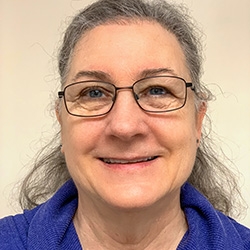
    When you say yes, check if you are saying it out of submission. Similarly, when you say no, are you saying it genuinely or out of rebellion? Marshall Rosenberg calls this a loss or erosion of goodwill which can destroy or undermine relationships. In this video, Rachelle Lamb shares how submission and rebellion in communication can diminish your power.
  • Payee: Rachelle Lamb
  • Points: 1

When you say yes, check if you are saying it out of submission. Similarly, when you say no, are you saying it genuinely or out of rebellion? Marshall Rosenberg calls this a loss or erosion of goodwill which can destroy or undermine relationships. In this video, Rachelle Lamb shares how submission and rebellion in communication can diminish your power.

Keywords:
  • Rachelle Lamb
  • submission
  • rebellion
  • Marshall Rosenberg
  • resentment
  • diagnosis
  • disconnection
  • denial
  • demands
  • deserve
Melanie Sears
  • Subtitle: Harnessing the Power of Compassionate Communication
  • Time Investment: 1 - 1.5 hours
  • Date Added: 2/2/2024
  • Intro Text:

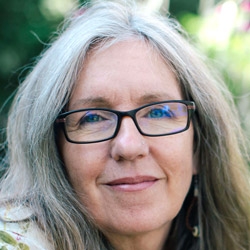
    Communicating with a client or patient with a mental health diagnosis can be tough. This guidebook introduces Nonviolent Communication, helping you develop more clear, compassionate, mutual satisfaction and potentially create conditions that heal those who look to you for help. With this guide learn to notice when your approach is likely to trigger defense and how to shift that to more authenticity, understanding and trust.
  • Date Created: 2009
  • Payee: Mark Schulz and Mary Mackenzie
  • Points: 15
  • Skill Level: Introductory Skill Level

Communicating with a client or patient with a mental health diagnosis can be tough. This guidebook introduces Nonviolent Communication, helping you develop more clear, compassionate, mutual satisfaction and potentially create conditions that heal those who look to you for help. With this guide learn to notice when your approach is likely to trigger defense and how to shift that to more authenticity, understanding and trust.

 
Keywords:
  • healthcare
  • neurodivergence
  • authenticity
  • understanding
  • defensive
  • mental health
  • OFNR
  • empathy
  • blame
  • responsibility
  • Melanie Sears
  • Time Investment: 9 - 13 minutes
  • Date Added: 2/1/2024
  • Intro Text:

    Reveal what's in your heart before asking a question to help build trust, especially if you're in an authority figure. Otherwise, your question may sound like a demand, blame, trap, intrusion or accusation, and it may elicit a defensive response. If you get a "question" like that, give them empathy. Read on for reflection questions to see how our revealing and our withholding impacts our relationships with others and with ourselves.

  • Payee: Rachelle Lamb
  • Points: 3
  • Skill Level: Intermediate Skill Level

Reveal what’s in your heart before asking a question to help build trust, especially if you're an authority figure. Otherwise, your question may sound like a demand, blame, trap, intrusion or accusation, and it may elicit a defensive response. If you get a "question" like that, give them empathy. Read on for reflection questions to see how our revealing and our withholding impacts our relationships with others and with ourselves.

 
Keywords:
  • question
  • conflict
  • reactivity
  • power
  • defensive
  • accusation
  • fear of intimacy
  • Rachelle Lamb
NVCAcademy Logo

Stay in Touch!

We value your privacy, won't share your email address and you can easily unsubscribe any time.